
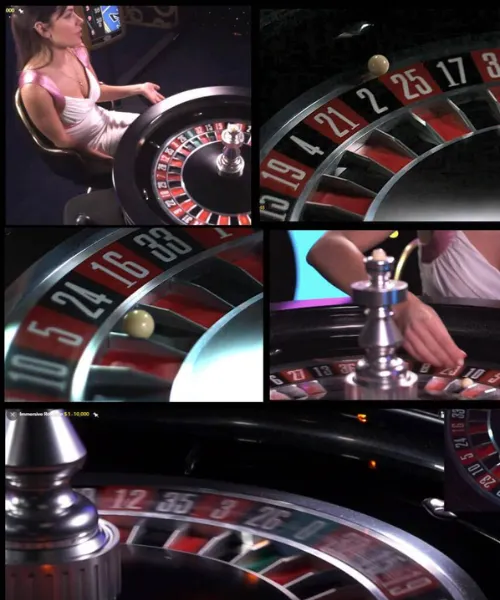
You know that feeling of walking into a real casino? The soft hum of conversation, the clatter of chips, the dealer’s smile as they slide your cards across the felt. For years, online live dealer games have tried to capture that magic—and honestly, they’ve gotten pretty close. But we’re standing on the brink of something much bigger.
The line between digital and physical is about to blur beyond recognition. Let’s dive into the convergence of live dealer technology and immersive virtual reality. It’s not just a new game; it’s a new world.
Beyond the Screen: The Current State and Its Limits
Right now, live dealer casinos are fantastic. You get a real human dealing in real-time from a professional studio. You can chat, you can see the shuffle, you can almost feel the tension. But it’s still… flat. You’re watching a video feed on a rectangle. Your interaction is limited to clicking buttons and typing in a chat box.
That’s the pain point, really. The social and tactile experience is… well, it’s mediated. You’re an observer more than a participant. The future is about breaking through that screen.
Putting on the Headset: Where VR and Live Dealers Collide
Imagine this. You slip on a VR headset. Instead of looking at a dealer on a monitor, you’re sitting at the table. You can look left and see the player next to you—their avatar, controlled by a real person across the globe. You can lean forward to see your cards better. You can nod to the dealer. You can pick up your virtual chips and stack them, feeling their weight through haptic feedback gloves.
This isn’t science fiction. The tech is here. The fusion is what’s next: using live, human dealers streamed into a fully realized, persistent virtual casino environment. The dealer is a real person; the environment is a crafted digital paradise; and you, the player, are embodied within it.
Key Technologies Driving This Fusion
- Volumetric Capture: This goes beyond a 2D camera. It captures the dealer in 3D, allowing you to view them from any angle in the virtual space. Their smile isn’t just pixels; it has depth.
- Haptic Suits and Gloves: Feeling the riffle of cards, the texture of the felt, the click of chips. This sensory feedback is crucial for true immersion.
- Persistent Social Worlds: Think less “single game session” and more “virtual destination.” You could walk (or teleport) from a blackjack table to a slots lounge, meeting friends at a virtual bar in between.
- 5G and Edge Computing: For this to work without lag—which is absolutely deadly for card games—we need near-instant data transmission. 5G and processing at the network’s edge make real-time, high-fidelity VR possible.
The Human Touch in a Digital World
Here’s the interesting twist. The more digital we get, the more we’ll crave the authentic human element. A pre-rendered CGI dealer is boring. The future of immersive VR casinos hinges on live human dealers. Their banter, their mistakes, their personality—that’s the irreplaceable core.
In fact, dealers might become true performers and hosts. Their role expands from game facilitator to virtual environment steward. Their studio becomes a volumetric capture stage, and their ability to engage with avatars will be a prized skill.
Challenges on the Road to Mainstream Adoption
Sure, it sounds amazing. But the path isn’t without bumps. Let’s be real.
| Challenge | What It Means |
| Cost & Accessibility | High-end VR gear and haptics are expensive. For mass adoption, the price needs to drop, or casinos will need innovative rental/subscription models. |
| Physical Space & Comfort | Not everyone has room to move around, and wearing a headset for hours can be uncomfortable. Lighter hardware is key. |
| Regulation & Identity Verification | How do you regulate a virtual space? How do you ensure the avatar is who they claim to be? Regulators are already scratching their heads. |
| The Social Awkwardness Factor | Interacting as avatars can feel… weird at first. Overcoming that initial uncanny valley of social VR will take time and clever design. |
A Glimpse at the Near-Future Experience
So what might a session look like in, say, five years? You’d probably start on your phone, honestly. Browse games, get invited by a friend. Then, for the full experience, you’d switch to your standalone VR headset (no wires, much cheaper than today).
You’d enter a sleek, modern casino lobby—or maybe a themed one, like a steampunk saloon or a Bond-villain lair. You’d meet your friend’s avatar, high-five them, and walk to a live dealer blackjack table hosted by a real dealer in Milan. You’d hear the ambient sounds of other tables, the soft music. You’d make eye contact with the dealer. You’d physically pinch your cards to peek at them.
The game ends, you cash out. Instead of logging off, you and your friend head to a virtual sports book to watch a live football match on a giant, floating screen. The experience becomes less about gambling in isolation and more about shared, social entertainment.
The Final Deal: More Than Just a Game
This evolution points to something deeper. It’s about connection in an increasingly disconnected world. The future of live dealer technology in VR isn’t just a better way to play roulette. It’s a new frontier for social interaction, wrapped in the thrill of the game.
The technology will get smaller, faster, and more intuitive. The human element—the dealer’s smile, a friend’s laugh through spatial audio—will become the centerpiece. We’re not just building better casinos. We’re building better, more engaging places to be.
That said, the core will remain. It’s still about the anticipation of the next card, the spin of the wheel, the shared groan or cheer around the table. The future just lets us feel it in our bones.


